Subway Tiles
Subway tile — the brick-shaped ceramic named for the early New York subway stations — is the most enduring tile format in American homes. It survives every trend cycle because it is a system, not a style: one simple rectangle that becomes classic, modern or rustic depending on layout, finish and grout. This page covers how to choose and lay it well.
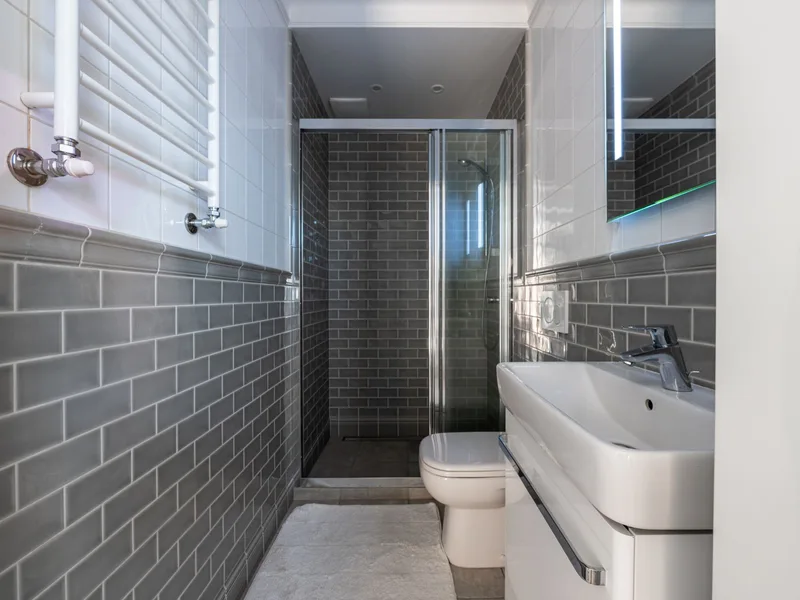
What counts as subway tile?
Traditionally it is a ceramic rectangle twice as long as it is wide, with a flat or gently beveled face and a glossy glaze. Today the family includes longer, slimmer bricks, matte and handmade-look versions with wavy edges, and colors far beyond the original white. The proportion is what matters — keep the length roughly double the width and the layout options below all work as drawn.
Layouts: the same tile, five rooms
Running bond (each row offset by half a tile) is the original and still the most forgiving — it hides minor wall unevenness and suits every style. A straight stack reads modern and architectural, but it shows every wobble, so walls must be flat and setting precise. Herringbone at 45 or 90 degrees turns a plain tile into the room's pattern and costs extra cuts at every edge. Vertical running bond or vertical stack stretches low ceilings. A soldier-course border or a picture-frame panel behind a range gives a plain field a designed finish.
Glossy, matte or handmade-look?
Classic gloss subway tile is bright, cheap to clean and shows its bevels beautifully — it is the backsplash default for a reason. Matte versions feel softer and pair with modern flat-front cabinets. Handmade-look subway, with rippled faces and varied glaze depth, is the choice when a kitchen feels too perfect; it costs more and its uneven edges make grout lines vary, which is exactly the charm. In showers, remember the glaze is only half the story — the waterproofing behind it does the protective work.
Grout: subway tile's design dial
White tile with white grout is a seamless, hygienic-looking wall. The same tile with charcoal grout becomes a graphic grid — striking, and it hides cooking film, but it also exposes every slightly-off line, so it demands careful setting. Mid-gray is the compromise most people keep happily. Joint width matters too: tight joints read modern, wider joints read rustic and are more forgiving of handmade tile.
Cutting and setting tips
Subway layouts live or die on the edges: plan so the tiles at corners and ceiling lines are not slivers. A score-and-snap cutter handles most straight cuts in ceramic subway tile; inside corners and outlet notches need a wet saw or nippers. Start a backsplash from a level ledger at counter height and work up. Our installation guide covers cutting technique in detail, including how to cut subway tile without chipping the glaze.
Frequently asked questions
How do you cut ceramic subway tile?
Score the glaze with a tile cutter and snap for straight cuts — ceramic cuts cleanly this way. Use a wet saw for L-cuts around outlets and a tile file to ease sharp edges. Mark on the face and cut slowly to avoid chipping the glaze at the exit of the cut.
Is subway tile going out of style?
It has been declared over many times and keeps outselling the obituaries, because it is a neutral building block rather than a fashion item. What changes is how it is used: new layouts, matte finishes, handmade looks and colored glazes keep the same rectangle current.
What grout color is best with white subway tile?
White grout gives a clean, blended wall; light gray adds gentle definition and hides film better; dark grout makes a bold grid but shows setting imperfections. In kitchens, a mid-tone sealed grout is the low-regret choice.
Can subway tile be used on a bathroom floor?
Wall-weight subway tile should not be walked on. Floor-rated tiles in brick formats do exist and can be laid in the same patterns — check that the specific product is rated for floors before using any brick tile underfoot.
How much does subway tile layout affect cost?
The tile itself is the same; layout changes labor and waste. Running bond is fastest with the least waste, herringbone is slowest with the most cuts and extra material. If you are DIY-ing, running bond is the kindest first project.
Planning a tile project?
Tell us your room size and the styles you like — we will prepare your quote summary.
Request a Quote Count My Tiles