Ceramic Floor Tiles
Ceramic floor tile is the workhorse of American homes: a glazed clay tile that shrugs off spills, muddy shoes and pet paws while giving you more colors and patterns than almost any other floor. This collection gathers the floor-rated ceramic styles we showcase — from quiet stone-look planks to bold patterned squares — with the practical detail you need before you order.
What makes a tile floor-rated?
Not every ceramic tile belongs on a floor. Floor tiles are fired to be thicker and harder than wall tiles, and their glaze is made to take foot traffic without wearing through. When you compare tiles for a floor, look at three things. First, the surface: a matte or lightly textured glaze hides dust and gives shoes something to grip. Second, the body: press-molded ceramic with a dense, even back pattern bonds better to thin-set mortar. Third, the wear rating the maker assigns — a tile intended for walls only will say so, and it should never be laid where people walk. Every style in this collection is a floor-suitable ceramic, but always confirm the rating on the box before a large order.
Where ceramic floor tile works best
Kitchens are the classic home for ceramic floors: dropped pans, splashed dishwater and tracked-in grit are all handled with a mop. Entryways and mudrooms benefit for the same reason — the glazed surface does not absorb what boots bring in. Hallways, laundry rooms and dining areas are equally good fits. In living rooms, ceramic gives a cool, clean base that pairs well with rugs, and wood-look ceramic planks deliver the warmth of timber visuals without the worry about scratches or water rings. For bathrooms, ceramic floor tile is a sound choice too, though that room has its own moisture rules and gets a dedicated page in our bathroom collection.
Finishes: matte, satin and polished
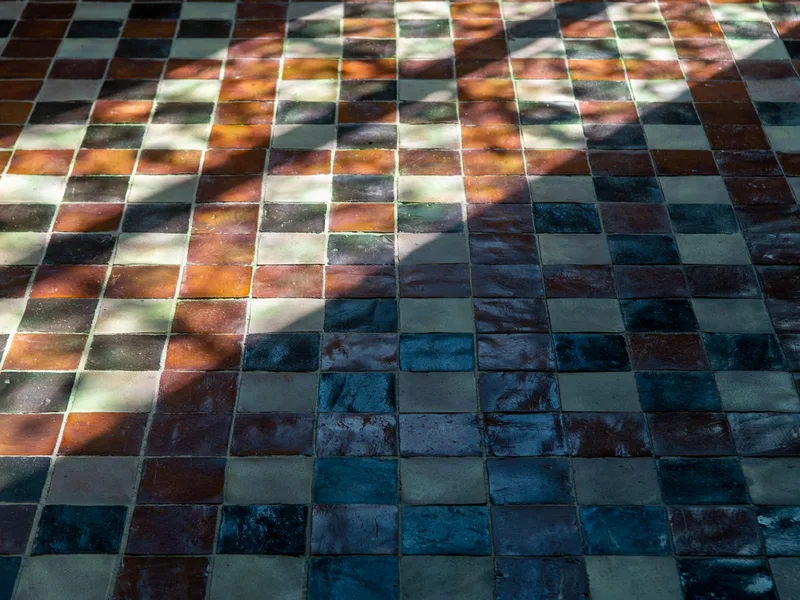
Finish changes both the look and the upkeep of a floor. Matte ceramic is the forgiving option — it hides footprints and needs the least day-to-day attention. Satin sits in the middle, with a soft sheen that brightens a room without acting like a mirror. Polished and high-gloss floors look striking in formal spaces, but they show every crumb and can feel slippery when wet, so they suit low-traffic, dry rooms best. If the floor will see water — a kitchen sink zone or an entry in a rainy climate — lean matte or textured.
Sizes and layouts that change the room
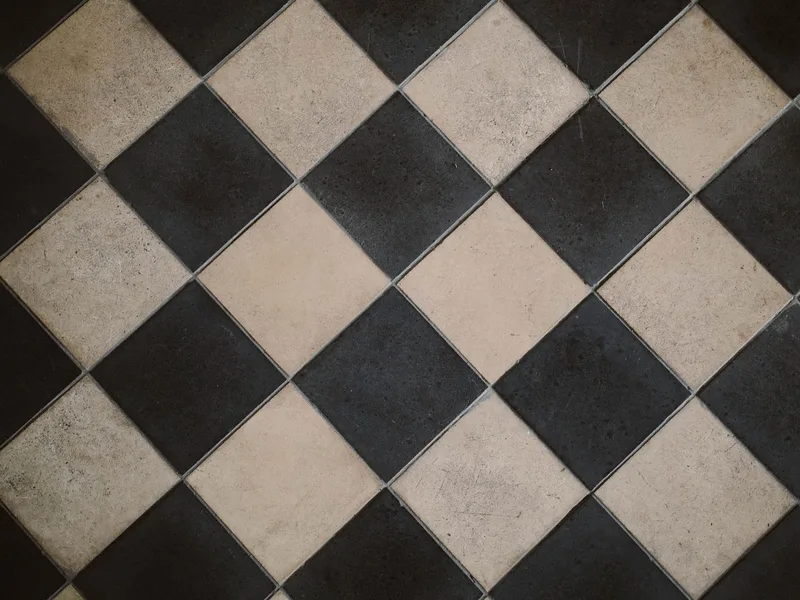
Tile size steers how big a room feels. Large square tiles with tight grout lines make small kitchens feel calmer and wider. Classic squares in a checkerboard layout bring vintage character to entries and laundry rooms. Rectangular planks laid in a staggered or herringbone pattern stretch a hallway visually. Before you fall for a size, read our tile sizes guide — it covers the standard dimensions US stores stock, in inches and millimeters, and how grout joint width changes the tile count.
How much floor tile to order
Measure length times width for each area, add the areas together, then add a waste allowance for cuts and breakage — a simple square room needs less extra than a diagonal layout with many cuts. Our free tile calculator does the math for you, including boxes, once you enter your room size, tile size and the coverage printed on the box. Ordering all boxes in one go matters: dye lots vary slightly between production runs, and a floor patched from two lots can show a visible shade shift.
Frequently asked questions
Is ceramic tile good for kitchen floors?
Yes. Glazed ceramic resists water, stains and heat, and it cleans with a mop, which is why it has been a standard kitchen floor for decades. Choose a matte or textured finish near the sink and stove so wet spots are less slippery.
Can ceramic floor tile be used in a living room?
It can. Many homeowners use wood-look or stone-look ceramic planks in living areas for a hard-wearing, easy-clean floor, then soften it with rugs. If your home has radiant floor heating, ceramic is one of the best surfaces over it because it conducts heat well.
How long does a ceramic tile floor last?
A correctly installed ceramic floor on a sound subfloor lasts for decades — the glaze is the wear surface, and when it is rated for floors it does not wear through under normal home traffic. Most failures trace back to a flexible or damaged subfloor, not the tile itself.
Does ceramic floor tile need sealing?
The glazed tile surface does not need sealing. Cement-based grout does benefit from a grout sealer, which slows down staining and makes cleaning easier. Epoxy grout does not need sealing.
Can I lay ceramic floor tile over vinyl flooring?
Sometimes, but it is risky. Tile needs a stiff, well-bonded base; loose or cushioned vinyl flexes and cracks grout. If the vinyl is a single, firmly glued sheet over a solid subfloor, some installers tile over it with the right mortar — our installation guide walks through the checks. Removing the vinyl is the safer route.
Planning a tile project?
Tell us your room size and the styles you like — we will prepare your quote summary.
Request a Quote Count My Tiles