Small Bathroom Tile Ideas That Make the Room Feel Bigger
A small bathroom cannot gain square feet, but tile can change how big it feels — light, line direction and grout contrast are powerful levers. These nine ideas are the ones designers reach for repeatedly, plus the common choices that quietly make a small bath feel smaller.
1. Run wall tile vertically
Rectangular wall tile laid with its long edge vertical draws the eye upward and makes a low ceiling feel higher. In a small bath with a standard ceiling, a vertical stack or vertical running bond on the shower walls is one of the cheapest 'extra height' illusions available. Keep the grout close to the tile color so the lines read as texture, not a ladder.
2. Lay the floor on a diagonal
Diagonal floors point the eye into the corners, and the room reads wider than its tape-measure width. The trade-off is more cuts and more waste — budget for it in your quantity math with the tile calculator — but in a 5x8 bathroom the extra material is a handful of tiles, and the effect is real.
3. Match grout to tile on the walls
High-contrast grout chops a small wall into a grid of little boxes. Grout matched to the tile color turns the same wall into one calm surface. Save contrast for the floor if you want pattern, and even there, a mid-tone grout keeps a small floor from looking busy.
4. Take shower tile to the ceiling
Stopping tile at some arbitrary line halfway up the shower wall visually lowers the ceiling and leaves a paint band that suffers in the steam. Running the tile full height unifies the wet zone, protects the wall completely and makes the whole room feel taller and more finished.
5. Use mosaic where it works hardest
A mosaic shower floor is not just pretty — its joints give grip and the sheet follows the drain slope. In a small bathroom, one mosaic moment (the shower floor, or a niche back) adds craft without overwhelming the room. Pattern everywhere is the mistake; pattern in one place is the design.
6. Choose mid-size floor tiles
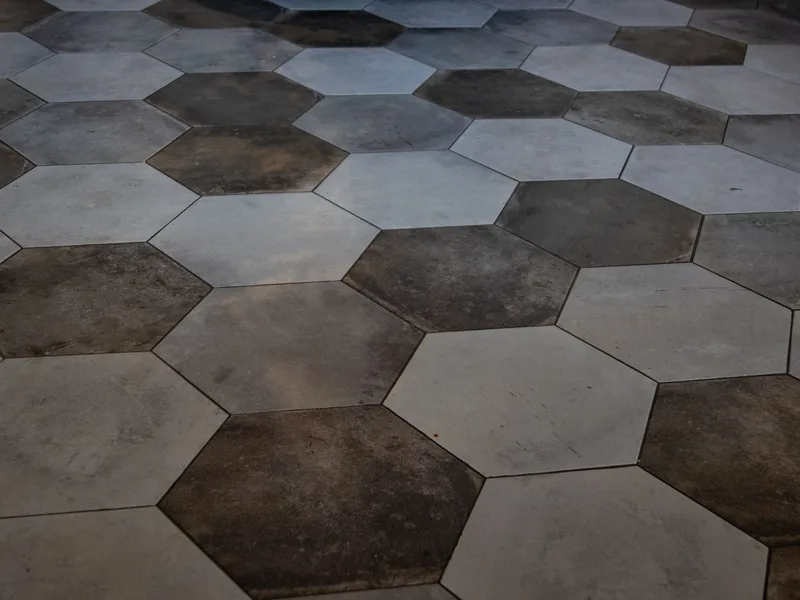
Very large tiles in a tiny floor mean awkward slivers at every fixture. Very small tiles mean a sea of grout. The sweet spot for most small bathrooms is a mid-size floor tile — large enough to feel calm, small enough to cut gracefully around the toilet and vanity. Hex mosaics are the exception that proves the rule: their pattern is the point.
7. Let one wall be the feature
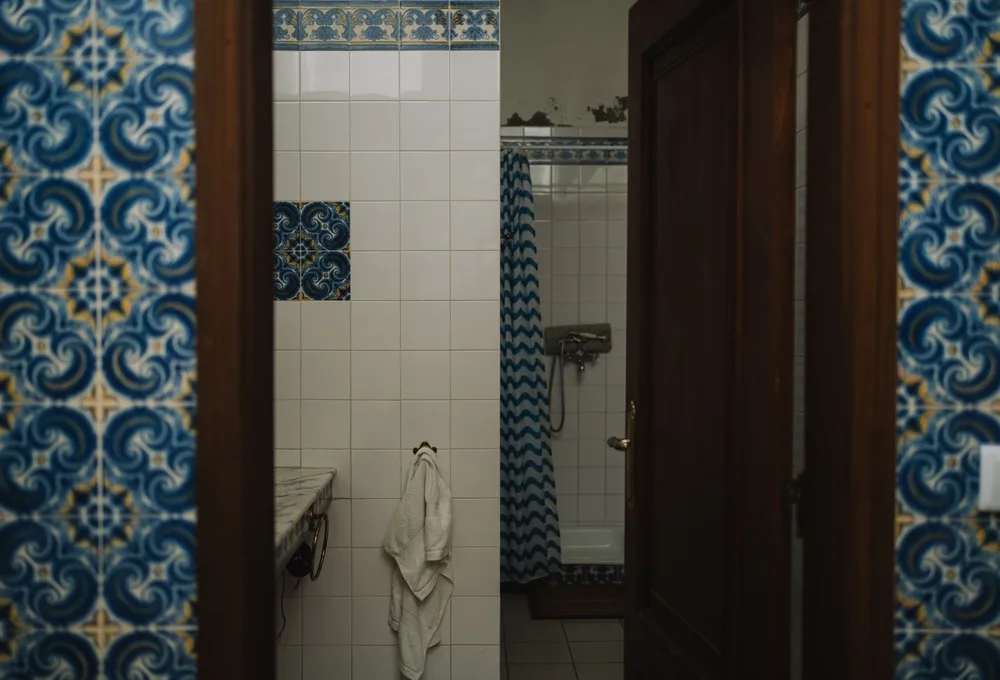
A patterned ceramic feature wall behind the vanity, or inside the shower, gives a small room its personality in a single gesture. Keep the other surfaces quiet — plain tile, matched grout — and the feature wall looks intentional instead of loud. Patterned ceramic earns this role because it will not peel, fade or fear the humidity.
8. Continue the floor into the shower
Where the design allows, running the same floor tile from the bathroom into a curbless or low-curb shower removes a visual border and the floor plane reads as one larger surface. The shower zone switches to a smaller format or mosaic of the same family for slope and grip — the color continuity does the expanding trick.
9. Mind the mistakes that shrink a room
Dark glossy floor tile with white grout, borders that ring the room at chair-rail height, three competing patterns, and tile stopped at different heights on different walls — each one slices the room into smaller pieces. Small bathrooms reward restraint: one pattern, one grout mood, lines that run long and unbroken.
10. Light the tile you chose
Tile is a light surface: glossy and satin glazes multiply whatever light the room has. A small bathroom with a single dim ceiling fixture wastes good tile. Layer in a brighter vanity light and, if the budget allows, a lit mirror — the same tile will look a full size airier. When you sample tile, judge it under the lighting the finished room will actually have, not the store's fluorescents.
11. Float the vanity, show more floor
A wall-hung vanity lets the floor tile run visibly underneath, and a floor that reads as one unbroken plane is the strongest small-room trick there is. The same logic favors a wall-hung or skirted toilet and a clear glass shower panel over a curtain: every object that interrupts the floor or the sightline taxes the room's apparent size, and tile rewards the rooms that let it run.
Putting it together: a sample plan
For a typical 5x8 hall bathroom: mid-size matte floor tile on the diagonal with mid-tone grout; the same family in a larger rectangle stacked vertically on the shower walls, tile to the ceiling; a mosaic shower floor matched in color; quiet walls elsewhere in the same tile or paint; one patterned moment inside the niche. Nothing exotic, no custom anything — just the levers above pulled in the same direction. Count it with the tile calculator and the whole room is usually a surprisingly modest stack of boxes.
Frequently asked questions
What color tile makes a small bathroom look bigger?
Light colors reflect more light and read as more space, especially with grout matched closely to the tile. That said, a dark floor with light walls can also work — the contrast grounds the room. What shrinks a room is not darkness itself but busy contrast everywhere.
Should I use large tiles in a small bathroom?
On walls, large tiles can look calm and modern if the walls are flat. On small floors, mid-size tiles usually fit better around fixtures with cleaner cuts. Avoid extremes at both ends unless the pattern itself is the design.
Is mosaic tile a good choice for a small bathroom?
Yes, in measured doses: shower floors (for grip and slope), a niche, or a feature strip. A whole small bathroom in mosaic can feel busy and means a lot of grout to maintain.
Planning a tile project?
Tell us your room size and the styles you like — we will prepare your quote summary.
Request a Quote Count My Tiles