Outdoor Patio Tile Ideas (With the Honest Material Rules)
Tile takes an outdoor space from slab to room — pattern underfoot, color that never fades, a floor that hoses clean. But outdoors is where tile choice has real consequences, so these ideas come with the material rules attached: which spaces can enjoy ceramic's color and pattern, and where frost and saturation demand porcelain or pavers instead.
The covered porch: ceramic's best outdoor stage
Under a roof, rain is occasional and the floor dries fast — exactly the conditions where ceramic thrives outdoors. A patterned ceramic porch floor in a traditional motif turns the front of the house into a welcome. Pair it with a border course for a rug effect, keep the finish matte for wet-day grip, and the porch becomes the favorite 'room' of the house for half the year.
Terracotta warmth for mild-climate terraces
Terracotta-look ceramic gives a sun-baked Mediterranean terrace without the sealing and softness of real terracotta. In frost-light regions it handles open patios well; the warm palette flatters plants, wood furniture and white walls. Large squares with wide joints read rustic; smaller formats with a patterned border tile read courtyard-formal.
The sunroom: an indoor floor with outdoor light
A sunroom or three-season room is protected like an interior, so any floor-rated ceramic is fair game — including wood-look planks that continue the house's flooring language. Tile's thermal mass is a bonus here: sun-warmed tile releases heat into the evening, extending the room's comfortable hours.
Patterned cement-look tiles for the modern patio
Bold geometric patterns in ceramic give a contemporary patio its design in a single material. On covered or mild-climate patios this is a proven look; in freeze-thaw regions, get the same visual from porcelain versions of the pattern — the look survives the winter because the body absorbs almost no water. Our outdoor collection page explains how to check a tile's suitability before you buy the look.
Outdoor kitchen and grill zones
Tile behind and beneath an outdoor kitchen needs to shrug off grease and heat: ceramic on the backsplash wall is ideal (glaze wipes clean, heat is no issue), and on the floor choose a textured finish that grips even with a splash of marinade on it. Darker grout hides the realities of a grill zone gracefully.
Pool surrounds: know the boundary
In mild climates, a textured ceramic rated by its maker for pool decks can work and looks wonderful. Where winters freeze, or where the deck stays saturated for months, porcelain pool-deck products are the standard for a reason. Bare feet also vote here: light colors stay cooler, and a fine texture beats a glossy finish every time.
Steps, edges and the details that finish it
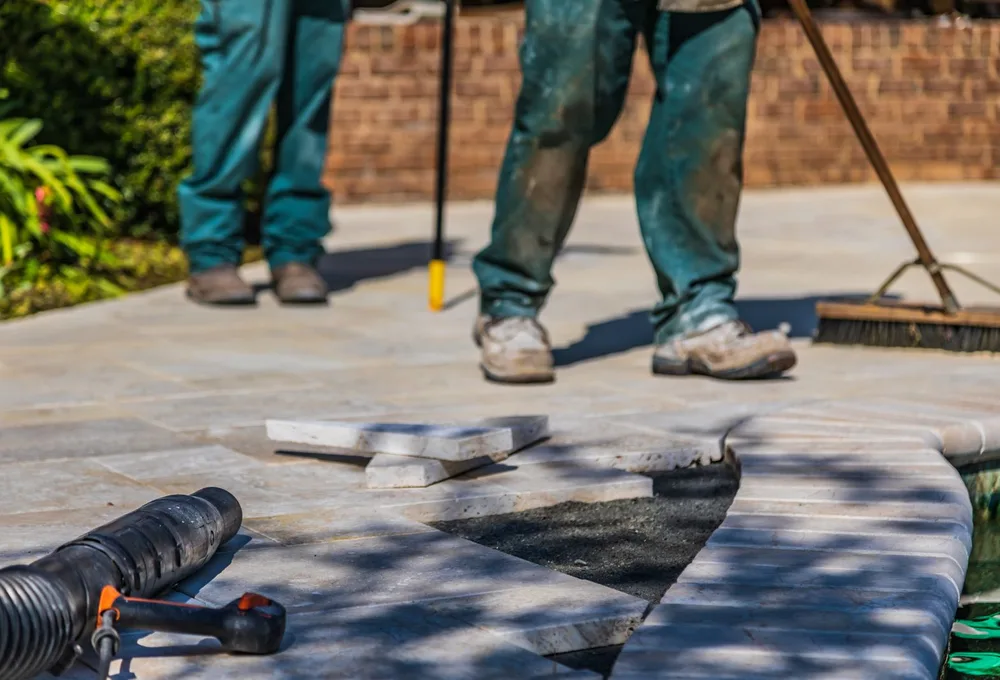
Outdoor tile jobs succeed or fail at edges: bullnose or metal trims on step noses, movement joints where the patio meets the house, and a slope that sends water away from the foundation. Plan these before the first tile is set — they are much harder to retrofit. And light the finished floor at night once; tile pattern under low garden lighting is half the reason you chose it.
Furniture, shade and living on the finished patio
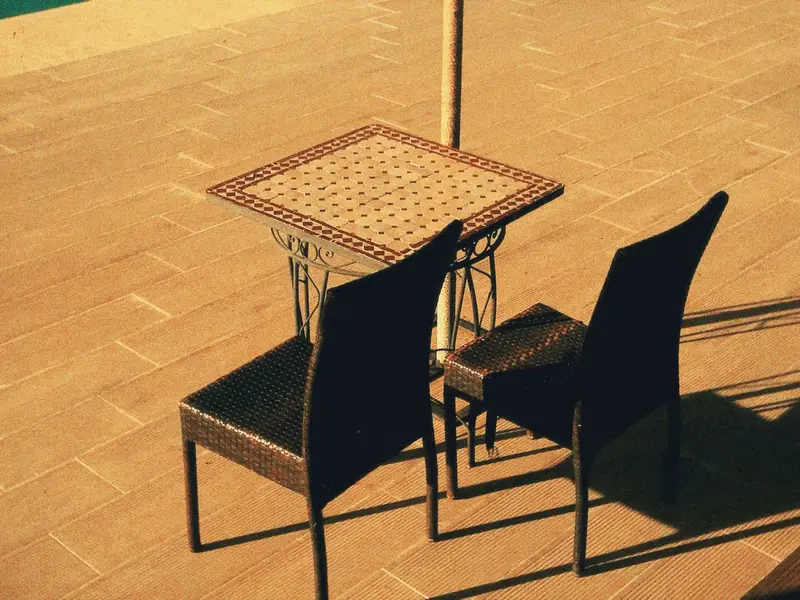
Plan the furniture before the tile: a dining zone wants a calm, larger format under the table (chair legs and grout lines are enemies — wide, smooth fields win), while a lounge corner can carry the patterned moment. Shade changes temperature dramatically on dark tile; if your patio bakes, test a sample tile in full afternoon sun with a bare foot before committing the whole floor to a deep color. Outdoor rugs over tile are fine and kind to feet — just lift them periodically so moisture does not sit against grout.
Maintenance outdoors: the short list
Sweep grit, hose down monthly, and scrub algae early in shaded corners before it becomes a slip film. Reseal cement grout on the same water-bead test you would use indoors, and check the caulked movement joints each spring — outdoors, those joints work hardest and fail first. Before winter in cold states, clear leaves and standing water from the surface: the freeze-thaw cycle is the enemy, and a dry patio enters winter with its best defense already in place.
Frequently asked questions
What is the best tile for a covered porch?
A floor-rated ceramic with a matte or textured finish. The roof keeps saturation and freeze risk low, so ceramic's full range of color and pattern is available. Confirm the tile is rated for floors and use exterior thin-set and grout.
Can I tile over an existing concrete patio?
Yes, if the concrete is sound, clean and crack-stable, with control joints respected (carried through the tile as movement joints). Cracks that are still moving will telegraph through tile; isolate or repair them first, and keep the patio's drainage slope intact.
What tile should I avoid outdoors?
Glossy tiles on any outdoor floor (slippery when wet), wall-only tiles underfoot, and standard absorbent ceramic on exposed floors in freeze-thaw climates. Each fails in a predictable way — the outdoor collection page explains the physics.
Planning a tile project?
Tell us your room size and the styles you like — we will prepare your quote summary.
Request a Quote Count My Tiles