Kitchen Backsplash Ideas: 8 Ceramic Looks Worth Copying
The backsplash is the one tile surface you look at every single day, at eye level, while the coffee brews. It deserves more than the default decision. Here are eight ceramic backsplash directions — from the classic that never fails to the bold move that makes the kitchen — with the practical notes each one needs.
1. Subway tile, but stacked
The brick you know, rotated into a straight stack, turns a traditional tile modern without changing the shopping list. Stacked layouts demand straight setting — there is no offset to hide a wandering line — so this is the look for flat walls and patient installers. White on white is gallery-calm; a soft color with matched grout is the current sweet spot.
2. Handmade-look tile with life in the glaze
Tiles with rippled faces and pooled, varied glaze catch light differently on every piece, and a flat-front modern kitchen gains instant soul. Expect uneven edges and varied joints — that is the product, not a defect. Choose a mid-tone grout so the variation reads as craft rather than error.
3. The patterned statement
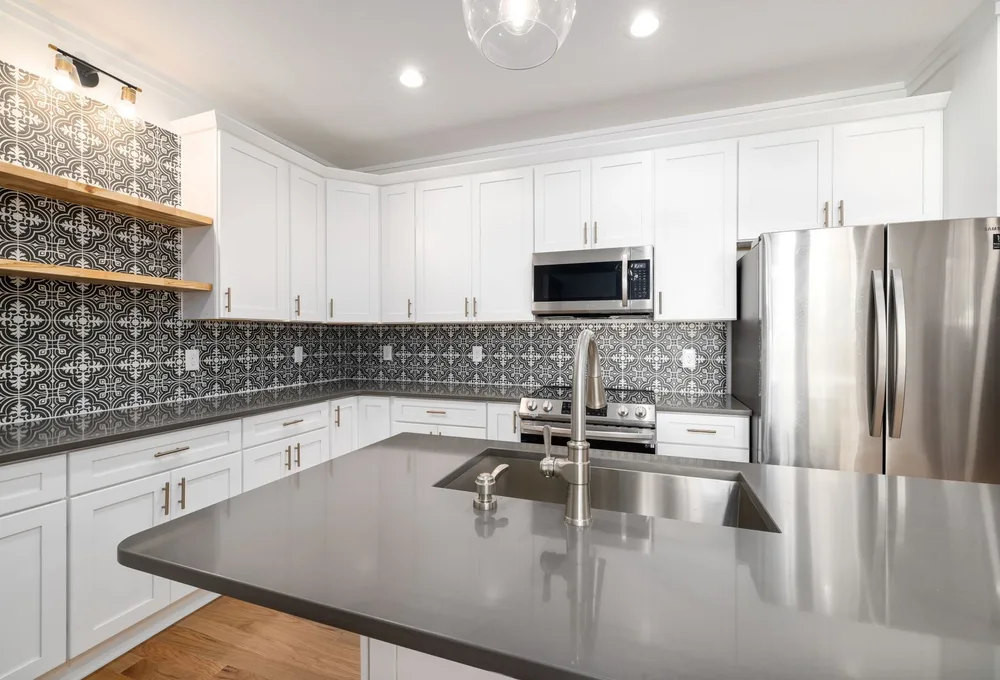
Encaustic-look patterned ceramic behind the range — or wall to wall — makes the backsplash the kitchen's artwork. Keep counters and cabinets quiet so the pattern has the stage. Pattern repeats need layout planning: center the motif on the range or the sink, and order extra for the cuts the pattern demands.
4. Mosaic texture in a single color
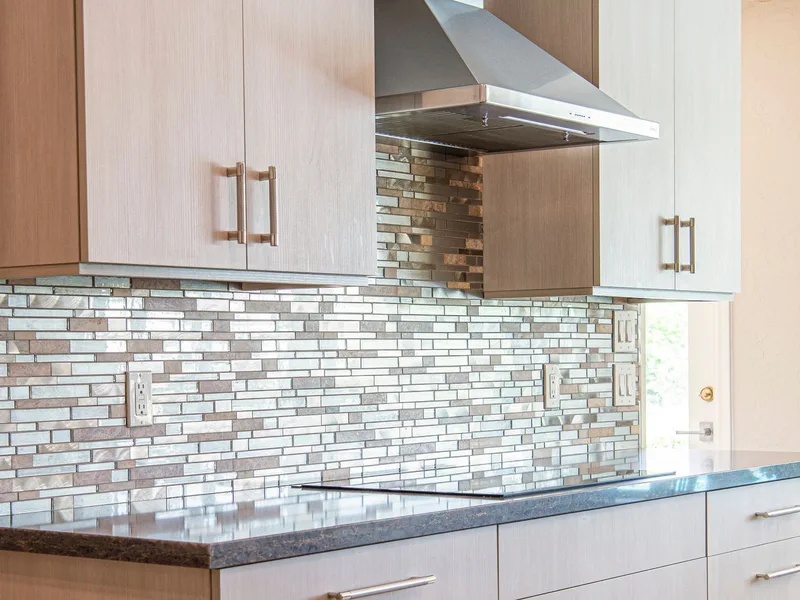
Small-format mosaic in one color — penny rounds, small hex, narrow fingers — gives a backsplash depth without pattern noise. It suits kitchens where the color story is calm but flat tile feels too plain. Remember mosaic means grout: choose the grout color as carefully as the tile, because it is half of what you see.
5. Tile to the ceiling
Running the backsplash up to the ceiling behind a range hood or open shelving turns a strip of tile into architecture. It protects the whole wall from cooking film and makes standard cabinets look custom. The extra area is modest; the visual payoff is the largest per tile on this list.
6. Checkerboard and vintage squares
Black-and-white (or cream-and-charcoal) squares in a checkerboard or diamond layout bring diner-era charm to farmhouse and retro kitchens. It is a forgiving pattern for DIY because the grid is simple, and it pairs naturally with butcher block and painted cabinets. Keep the squares modest in size so the pattern repeats enough to read.
7. Deep color, glossy glaze
A saturated green, navy or near-black glossy ceramic backsplash is dramatic, wipes clean beautifully, and makes white cabinets look expensive. Gloss shows the glaze's depth best under under-cabinet lighting. If the kitchen is small, confine the drama to the backsplash — which is exactly the size of stage it needs.
8. The quiet stone-look
Stone-look ceramic in large, calm pieces gives a backsplash the feel of a slab at a fraction of the fuss — no sealing, no staining anxiety, easy cuts around outlets. Choose this when the countertop is the loud one, or when the kitchen's style is warm minimalism and every other surface is already speaking.
How to choose among them
Start from what the kitchen already has: busy countertops want a quiet backsplash; plain cabinets can carry pattern or color. Then be honest about maintenance — glossy and smooth clean fastest behind a stove; heavy texture and white grout ask for more wiping. Finally, live with samples: tape tiles up for a day and look at them in morning and evening light before ordering. When you have a direction, our backsplash collection page covers sizing and quantities, and the tile calculator will count your boxes.
A note on outlets, edges and the unglamorous details
Every backsplash idea lives or dies on its interruptions: outlets, window frames, the range hood line, the end of the counter run. Plan where the tile stops (flush with the counter edge? wrapped to the side wall?) and how cut tiles will land around outlets before you fall in love with a pattern. Use box extenders so outlets sit proud of the new tile face, and finish exposed tile edges with a matching trim or bullnose rather than a raw cut edge. These decisions take ten minutes on paper and are nearly impossible to change in mortar.
Budgeting the backsplash honestly
A backsplash is a small area, which tempts people to splurge per tile and forget the rest: adhesive, grout, sealer, trim pieces, outlet extenders and a cutter rental belong in the same budget line. The good news is the total stays the smallest of any tile project in the house — which is exactly why the backsplash is the right place to buy the tile you actually love instead of the compromise. Our cost guide explains how to build the full materials list so nothing surprises you mid-project.
Frequently asked questions
What backsplash tile is easiest to keep clean?
Smooth glossy or satin ceramic with a mid-tone sealed grout. The glaze wipes clean in seconds and the grout color hides the fine cooking film that white grout shows within weeks behind a stove.
Should a backsplash match the floor tile?
It should coordinate, not match. Repeating the exact floor tile on the wall usually looks like a compromise. Better: share a color family or a material mood, and let each surface have its own scale.
How do I choose a backsplash if I plan to sell the home?
Choose the broadly loved options: subway in a clean layout, a quiet stone-look, or soft neutral handmade-look tile. Bold pattern and deep color are wonderful to live with and narrower in resale appeal — a trade worth making knowingly.
Planning a tile project?
Tell us your room size and the styles you like — we will prepare your quote summary.
Request a Quote Count My Tiles